
Why Sump Pumps Fail: A Guide for Adelaide Homes
By Robert · 22 October 2026 · Maintenance · 6 min read
Not every home needs a sump pump: where stormwater can run downhill to the street, it should. A pump comes in when it can't, on a block that sits below the street, a courtyard with nowhere for the water to fall, or an underground garage. Rain drains into a pit (the sump), and when the water rises, a float switch starts a pump that pushes it up and out to the street drain.
Once it's in, a sump pump is easy to forget. It sits in the dark at the bottom of a pit for months, then the first big winter front rolls in and it's expected to work flat out. When one fails, it's rarely bad luck: it's nearly always one of a handful of things, and most can be caught early or designed out from the start.
Whether you've got one already or you're thinking about getting one installed, here's what goes wrong, the warning signs, and what to look for in a new system. For how the pieces fit together, see my plain-English guide to sumps and pits.
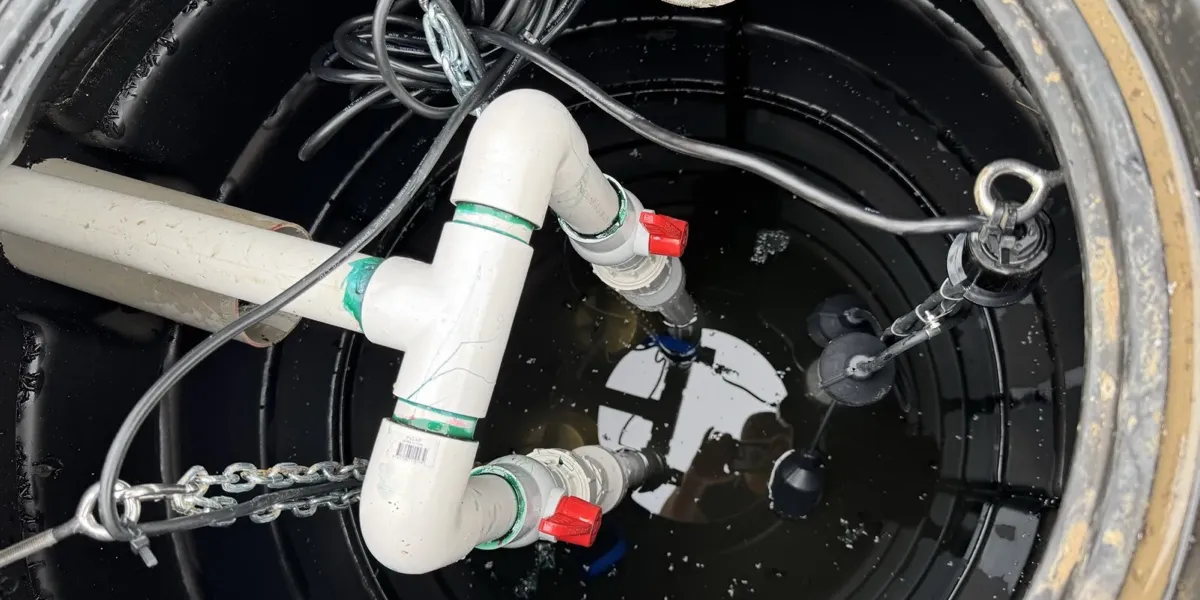
Why Adelaide is tough on sump pumps
Our weather works against them. According to the Bureau of Meteorology, most of the Adelaide region's rain falls between April and October. That means a pump can sit idle through a long, dry summer and then be asked to do its whole year's work in a few months, often in heavy bursts.
A pump that hasn't run since spring is exactly the pump that sticks on its first cycle.
The six usual suspects
1. A stuck or tangled float switch
The float switch is what tells the pump to start and stop. If it snags on the pit wall, gets tangled in its own cable, or gets pinned down by debris, the pump either never gets the signal to start or never gets the signal to stop. The first floods the pit; the second runs the pump dry until it burns out.
2. Leaves, silt and garden debris
Anything that washes into the pit ends up at the pump. Leaves, grit, mulch and sand clog the intake and wear the impeller, and pits fed by driveway or courtyard grates cop the worst of it. A pump buried in silt can't move water no matter how good it is. Keeping debris out at the surface, with well-designed grates and surface drainage, takes a lot of load off the pit.
3. A faulty non-return valve
A pumped discharge line should have a non-return (check) valve so the water in the pipe can't run back into the pit when the pump switches off. If that valve sticks open, the same water drains back in after every cycle and the pump runs over and over, wearing itself out. If it sticks shut, the pump is pushing against a closed door.
4. A power cut
Most household sump pumps run on mains power, so when the power goes, the pump stops. Blackouts tend to come with wild weather, when wind and falling branches bring down lines, which is exactly when the pit is filling fastest. (We've written more about why Adelaide's spring storms keep flooding homes.) A battery backup is the answer here; more on that below.
5. A pump that's wrong for the job
A pump has to be sized for two things: how much water comes in, and how far it has to lift that water to get it out (the "head"). An undersized pump can't keep up in a downpour, especially on a deep block lifting water uphill to the street. An oversized one can cycle on and off too quickly. If your pump has always struggled, the pump itself may not be the problem; the design might be.
6. A blocked outlet
The water has to get out once it leaves the pump. If the discharge line is crushed, or the outlet at the kerb is buried under mulch, blocked with leaves or flattened by a car, the pump can run perfectly and the water still goes nowhere.
Warning signs your pump is struggling
Don't wait for water on the floor. Get it looked at if you notice:
- The pump runs when it hasn't rained, or won't switch off
- It hums but doesn't seem to move any water
- New grinding, rattling or clunking noises
- The water in the pit sits higher than usual after rain
- Rust, cracked fittings, or an alarm that's started going off
A simple pre-winter check
Late March or April, before the wet season gets going, is the time to do this.
- Switch it off first. Turn the pump off at the power point or isolator before you reach into the pit.
- Clear the pit. Lift the lid and scoop out leaves, silt and anything else that's washed in.
- Check the float. Make sure it moves freely and its cable is secured away from the pump and the pit walls.
- Test a full cycle. Power back on and run a hose into the pit until the float lifts. The pump should start, empty the pit and switch itself off cleanly.
- Check the outlet. Find where the discharge line comes out and make sure it's clear.
- Test your backup and alarm, if you have them.
One firm rule: leave the wiring alone. In South Australia, anyone doing the physical electrical work must be registered as an electrician. If anything electrical looks wrong, call a pro.
Backups worth having
If water in your pit means water in your house, one pump isn't enough insurance. The common upgrades are:
- Battery backup, so the pump keeps running through a blackout.
- A second pump that takes over if the first one fails or can't keep up.
- A high-water alarm that warns you before the water reaches a level that matters.
On a low-lying block, these are what turn a sump from "usually fine" into something you can actually rely on when a storm hits at 2am.
Repair, replace or rethink?
If your pump has packed it in, don't assume you're up for a whole new system. A failed pump in a pit that's in good nick is usually a straight swap, with no digging and no new pipework. But if you're on your second or third pump, or the pit floods even when the pump is working, it's worth stepping back and looking at the whole setup: pit size, pump sizing, the discharge route and the backup. Our sump and pump service covers exactly that kind of assessment.
What to look for in a new system
Most of the failures above can be designed out on day one, in a new build or an existing home. When you're getting a quote, ask about:
- Pump size: matched to how much water drains to the pit and how high it has to lift it.
- Pit size: too small, and the pump switches on and off constantly and wears out.
- A non-return valve on the discharge line.
- The outlet: usually the street kerb or a council drain. Your council may need to approve the connection.
- Access: a lid you can lift and a float with room to move, so the pit can be cleaned and checked.
- Backup and alarm: easier to build in from the start than to add later (see Backups worth having, above).
The plumbing should be done by a licensed plumber, and a new power point for the pump is a job for a registered electrician.
Keep it boring
A good sump pump is boring. It starts, it empties the pit, it stops, and you never think about it. The right design from the start, a quick check before winter and the right backup for your block keep it that way. For the bigger picture on keeping water away from your home, see our complete guide to stormwater management in Adelaide.
Thinking about a sump pump, or not sure yours will cope come winter? Get in touch with Stormwater Plus. We'll look at your site or your existing pit and tell you straight whether you need a service, a backup or a new system.